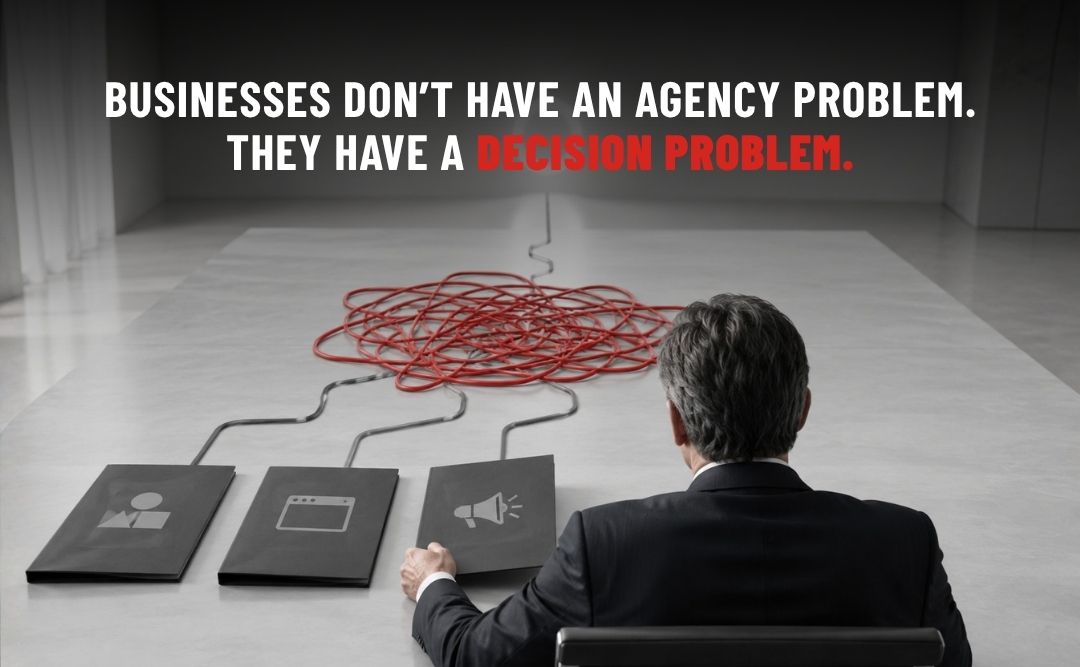
Why Capable People Struggle to Deliver Results
When Responsibility Comes Without the Authority to Make Decisions
A Sales Manager is given an ambitious quarterly revenue target. The expectations are clear, performance will be reviewed, and the manager is responsible for delivering the results.
However, an important customer requests a price adjustment that requires senior management approval. Recruitment of an additional salesperson remains pending. A customer commitment cannot be confirmed without consulting another department, while a proposed promotional activity is awaiting budget approval.
The manager follows up, coordinates with colleagues and continues pursuing the target. Yet several decisions affecting the outcome remain outside the manager's authority.
At the end of the quarter, the expected revenue is not achieved.
Management asks a reasonable question: Why did the manager fail to deliver the result?
But there is another question worth examining: Did the manager have sufficient authority, resources and organisational support to achieve the result for which they were held responsible?
This situation is illustrative, but the underlying management issue can arise in businesses of different sizes and structures.
The problem is not necessarily that management expects too much or that employees are unwilling to take responsibility. Often, it is that the organisation has not clearly established who can make which decisions, within what limits, and how quickly necessary approvals must be provided.
Responsibility, Authority and Accountability Are Three Different Things
Although these terms are frequently used together, they represent different aspects of management.
Responsibility
Responsibility refers to the work, duties or outcomes assigned to a person. A Production Manager, for example, may be responsible for meeting a delivery schedule while maintaining the required quality standards.
Authority
Authority refers to the recognised right to make decisions, direct activities or approve actions within defined boundaries. The same Production Manager may need authority to allocate work, arrange overtime within an approved budget or prioritise production orders.
Accountability
Accountability concerns the obligation to explain decisions, actions and results, and to have performance reviewed against agreed expectations.
These three elements are connected, but assigning one does not automatically establish the others.
A person may be responsible for an outcome without having independent authority over every decision affecting it. Similarly, a person may have authority to approve expenditure but must remain accountable for how that authority is exercised.
This does not mean that every manager should receive unlimited authority. It means that the authority provided should be reasonably aligned with the responsibilities assigned, while remaining subject to suitable controls.

Delegating Work Is Not the Same as Delegating Decisions
Many organisations delegate tasks more readily than they delegate decision-making authority.
A manager may be instructed to improve departmental performance, reduce costs or complete projects on schedule. Yet the decisions required to achieve those objectives may remain concentrated at a higher level.
Consider a Purchasing Manager responsible for ensuring that materials reach production on time.
The manager can identify requirements, obtain quotations, negotiate with suppliers and prepare purchase recommendations. However, supplier selection and purchase approval may require decisions from senior management.
Such an arrangement may be entirely appropriate for high-value purchases or suppliers presenting significant commercial risks.
The difficulty arises when routine purchases within an established budget also remain dependent on approvals that are not provided within the time available.
The Purchasing Manager is then responsible for material availability but cannot independently complete the purchasing process.
If production is delayed, the organisation must examine more than the purchasing department's final performance.
It should also examine whether the approval process operated within the required timeframe.
Delegating an outcome without defining the decisions needed to achieve it can create responsibility that is difficult to exercise effectively.
The Hidden Business Cost of Waiting for Approval
Approval systems are necessary. They help businesses control expenditure, manage risks, maintain standards and prevent inappropriate decisions.
However, an approval process can become an operational obstacle when routine decisions repeatedly wait for attention.
A decision requiring only a few minutes of consideration may remain pending for several days because the authorised person is unavailable, priorities are unclear or the matter has not been escalated appropriately.
The consequences may extend beyond the original decision.
A delayed material purchase can affect production planning. A pending recruitment approval can increase the workload of an existing team. A postponed customer decision can reduce the time available to respond to an opportunity.
The problem is not simply the number of approvals. It is whether the approval system is appropriate for the nature, urgency and risk of the decisions involved.
Businesses should therefore distinguish between decisions that require careful senior-level consideration and those that can be made safely within established operating limits.
Why Capable People Sometimes Stop Taking Initiative
When employees or managers repeatedly encounter unclear authority boundaries, they may become uncertain about which decisions they are permitted to make.
Some respond by seeking approval even for relatively minor matters. Others become reluctant to propose changes because they cannot determine whether their recommendations will be supported.
This should not automatically be interpreted as a lack of confidence, competence or commitment.
It may reflect the way the organisation has defined responsibilities and decision rights.
For example, a Customer Service Manager may be expected to improve customer satisfaction but may have no authority to approve reasonable replacements, service adjustments or exceptions within defined limits.
If every complaint requires senior intervention, the manager's ability to resolve issues promptly becomes restricted.
Yet the opposite arrangement also carries risks. Allowing unrestricted replacements or concessions could expose the business to unnecessary costs or inconsistent treatment of customers.
The practical solution is to establish clear boundaries: which issues can be resolved independently, which require additional approval and when escalation is necessary.

Every new idea has an execution cost
A senior person may suggest, “Can we try another version?” The suggestion takes ten seconds, but the alternative may require four hours. Another person may forward a reference with the message, “Can we explore something like this?” Understanding the reference, reconsidering the direction, creating an alternative and presenting it may consume half a day.
Exploration is valuable. The problem begins when organisations treat every suggestion as if it has no execution cost.
This is particularly important when suggestions come from people with authority. What a senior person considers an idea may easily be interpreted by the team as an instruction.
Too Many Decision-Makers. Too Few Decision Owners.
Collaboration improves decisions when different perspectives are considered properly. Marketing understands customers. Sales understands objections. Operations understands feasibility. Finance understands cost. Leadership understands business priorities. External specialists contribute their expertise.
But input and decision authority are not the same thing. Problems begin when everyone can redirect the work, but nobody clearly owns the final decision.
Final Call.
Responsibility.
One person wants simplicity, another wants more information. One wants premium positioning, another wants aggressive communication. One wants to launch immediately, another wants three more options. Each opinion may be reasonable independently. Together, they can make execution extremely difficult.
The team is no longer solving only the original business problem. It is trying to satisfy multiple interpretations of that problem.
A decision owner is not necessarily the most senior person. It is the person who has clearly defined authority to consider inputs, make the final call and accept responsibility for the outcome. Without that clarity, organisations can have many decision-makers but very few decision owners.

Managers Should Reduce Complexity,
Not Add to It
As businesses grow, owners appoint managers so that every operational decision no longer needs their personal involvement. A good manager should reduce the decision load on both leadership and execution teams.
The role involves understanding inputs, evaluating priorities, resolving conflicts, considering operational realities and giving the team a direction it can act upon.
If every opinion received by a manager simply becomes another instruction for the team, the management layer has not reduced complexity. It has transferred it.
Similarly, when the owner gives one direction and the manager gives another, the team may be left wondering which instruction carries final authority. The owner may be right. The manager may be sincere. The team may be capable. Yet the working system can still create confusion.
Instead of asking who is wrong, leadership should examine how decisions move through the organisation. A well-defined management structure should make responsibilities clearer, decisions faster and execution more predictable, not merely introduce another approval stage.
Seven Signs Your Team May Be Working Twice
These familiar situations may indicate that avoidable rework is consuming business capacity.
“Final” work regularly comes back for another round. Final has become another stage in the process rather than a decision.
New references appear after approval. Useful suggestions arrive after the team has already invested time in the approved direction.
Different senior people give different directions. The team spends more time reconciling opinions than executing decisions.
People frequently ask, “Whose approval is final?” Decision ownership is unclear.
The brief becomes clearer only after execution begins. Important thinking is happening after time and resources have already been committed.
Completed work receives more discussion than the original objective. Attention moves from solving the problem to repeatedly modifying the output.
Management repeatedly asks, “Why is this taking so long?” But nobody examines how many times the work has restarted.
Rework Often Begins Before the Work Begins
A surprising amount of rework starts before anyone begins execution. The objective is not completely clear. The audience is loosely defined. Different stakeholders expect different outcomes. The decision-maker is uncertain and success has not been defined.
But execution begins anyway because starting feels productive. The designer starts designing, the marketing team creates content, the developer begins building and the salesperson prepares a proposal.
Only then do important questions emerge: What exactly are we trying to achieve? Who is this for? Which direction do we want? Who needs to approve it? Those questions were always there. They simply appeared after execution had already started.
A clear brief cannot eliminate every revision, nor should it. But it improves the likelihood that the first execution moves in the right direction.
Not all rework is waste
A prototype may require iteration. Creative work needs exploration. Testing may reveal something nobody could have known earlier. Customer feedback may justify a change, and an original assumption may prove wrong. In these situations, rework can be part of learning and improvement.
The objective should never be to create an organisation where nobody is allowed to change their mind. That would create a different problem.
The important distinction is between rework that creates learning or better outcomes and rework caused by avoidable confusion, unclear decisions or unnecessary repetition. The first may be an investment. The second quietly consumes capacity.
Before Asking Your Team to Work Faster
When businesses face a capacity problem, the first response is often to hire another person, add another vendor, extend the deadline, introduce software or ask employees to increase speed. Sometimes additional capacity is genuinely necessary. But first, examine how work moves through the organisation.
A Simple Framework to Reduce Rework
You do not necessarily need another software platform to begin. A simple review of projects over one month may reveal enough. How much time went into creating something new? How much went into correcting genuine mistakes? How much was spent repeating work because the direction changed?
Why Can a Busy Team Still Have Low Productivity?
A busy team can still have low productivity when a significant part of its capacity is spent redoing work because of unclear briefs, changing priorities, multiple decision-makers or approvals that repeatedly reopen completed tasks.
This is why activity and productivity should not be treated as the same thing. A busy office can look highly productive. Calls are happening, meetings are full, messages are constant and everyone appears occupied. But productivity should move work towards a useful outcome.
If work repeatedly moves forward and backward, activity may remain high while progress remains low. This becomes especially important as organisations grow. More employees create more interactions, more departments require coordination and more managers introduce decision points.
The answer is not necessarily fewer people or fewer opinions. It is a clearer way for decisions to become execution.
One Question Can Change the Productivity Discussion
The next time a project feels unusually slow, instead of asking, “Who is delaying this?”, try asking:
Then examine the original brief, the reasons for each change, who approved them and how much work had to be repeated. Was the change necessary? Could the issue have been resolved before execution? Is this an isolated incident or a recurring pattern?
The objective is not to find someone to blame. It is to understand where capacity is being lost.
Reflection Questions for Business Leaders
Is our team genuinely slow, or does work repeatedly restart?
Does everyone know who owns the final decision?
What does “approved” actually mean in our organisation?
Are managers reducing complexity or transferring it downstream?
Are our most capable people spending too much time on avoidable rework?
Do we distinguish necessary iteration from unnecessary repetition?
How much of our capacity last month created new value?
Are we trying to solve a decision-making problem by asking people to work faster?
Leadership Checklist
Before increasing headcount or asking people to work faster, confirm that the objective is clear, final decision ownership is defined, approvals have operational meaning, changes have visible consequences and rework is measured. Check whether managers consolidate direction and whether your most capable people are repeatedly absorbing avoidable confusion.

A Consultant’s Perspective
Over the years, I have seen many situations where everyone involved was capable. The business owner understood the business, the manager was sincere, the internal team worked hard and the external agency or vendor had the necessary expertise. Yet the work still became slow and frustrating.
The natural instinct is to identify which person is creating the problem. Sometimes that is necessary, but often the more useful diagnosis lies between the people.
How does a brief become a decision? How does a decision become an approval? Who can reopen it? How are conflicting opinions resolved? Who owns the final outcome? These questions can reveal something that performance reviews often cannot.
Improving productivity does not always begin by asking people to do more. Sometimes it begins by helping them do the same work fewer times.
One Final Thought
Businesses naturally notice delayed projects, missed deadlines and teams saying they do not have enough capacity. What is harder to notice is the work that was already done once, then done again and sometimes done a third time.
That work disappears inside meetings, revisions, approvals and changing priorities. But its cost does not disappear.
Before concluding that your people are slow, look at how work moves through your organisation. If priorities keep changing, approvals keep reopening and multiple people can redirect completed work, you may not have a productivity problem at all.
Before asking people to work faster, perhaps the better question is whether the organisation is helping them move forward or repeatedly sending them backwards.
Consultant’s Note
Productivity is not only about how efficiently people work. It is also about how clearly organisations decide. Better briefs reduce uncertainty. Clear ownership reduces confusion. Meaningful approvals reduce unnecessary repetition. Thoughtful changes make the cost of changing direction visible.
Our Recent Blogs :