
Independent Technology Consultation for Better Business Decisions
Technology can improve efficiency, control, security and the way a business works.
But deciding what technology to buy should come after understanding what the business actually needs to improve.
My Technology Consultation provides an independent perspective before significant money, time or resources are committed to software, systems, infrastructure, automation or other technology decisions.
The objective is to help you understand:
Need
What actually needs improvement?
Existing Resources
What is already available or underused?
Options
What alternatives or technology paths exist?
Practical Value
What level of technology is worth justifying?
Start With the Business Requirement, Not the Technology
Technology decisions often begin with statements such as:
“We need an ERP.”
“We need a new server.”
“We need better security.”
“We should automate this.”
“We need new software.”
Any of those may eventually be correct.
But they describe a possible solution, not necessarily the actual requirement.
Before evaluating the product, I prefer to understand:
What is not working today?
What outcome is the business trying to achieve?
Where is the real difficulty?
Is it a technology problem, a process problem, a usage problem or a combination of them?
The Most Advanced Solution Is Not Always the Right Solution
A technology can be excellent and still be wrong for a particular business.
It may offer far more capability than the organisation needs.
It may introduce additional infrastructure, licences, training, support, integration and maintenance.
Or it may solve a technically visible problem while leaving the actual business problem untouched.
That does not make the technology bad.
It simply means:
Understand the Work Before You Automate It
Technology works within a business process.
So before automating, digitising or implementing a system, the work itself needs to be understood.
Which steps genuinely add value?
And which activities continue only because they have always been done that way?
This is especially important with ERP, CRM, workflows, document management, automation and integrated business systems.
A poorly understood process does not automatically become a good process because it has been converted into software.
Recent digital-transformation research similarly finds that successful transformation depends on the interaction of people, process and technology, rather than technology alone.
Use What You Already Have Before You Add More
Businesses can accumulate technology over time.
New tools are introduced, but old ones remain.
Licences are purchased, but only part of their capability is used.
Manual processes continue even after software has been implemented.
Different departments may use different tools for similar work.
Or an existing system may already be capable of meeting much of a new requirement if it is used differently.
That is why my first assumption is not that something new has to be purchased.
A recommendation may be:
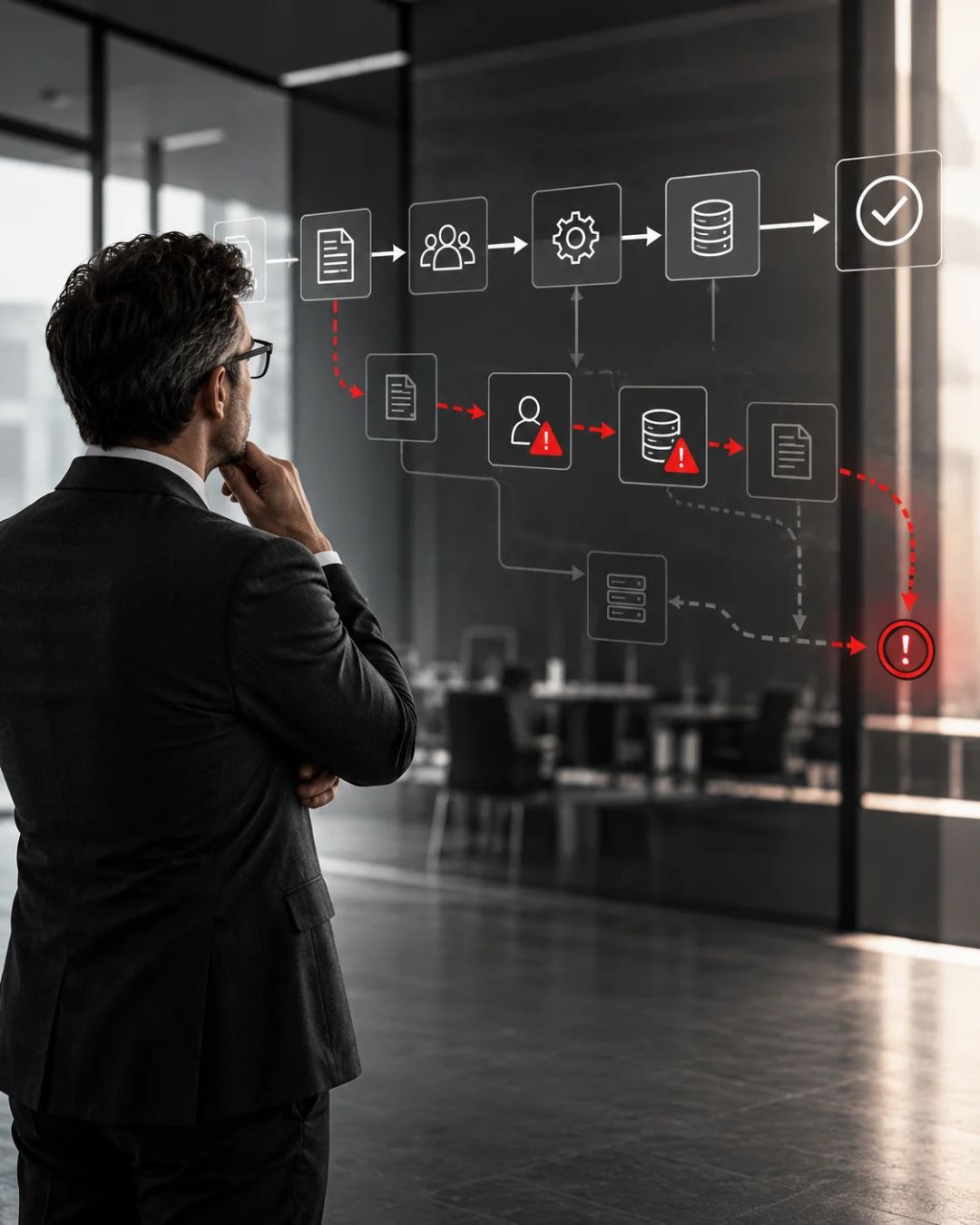
A Strong Technology Solution Can Still Miss the Real Problem
A business may install good software, upgrade hardware, improve security or automate a process and still not achieve the expected result.
If the underlying issue is unclear requirements, weak usage discipline, process confusion, poor data quality or lack of internal alignment, technology alone may not solve it.
That is why I prefer to examine the business situation before treating the technology itself as the answer.
Technology should be judged not only by what has been installed, but by what happens in the real working environment after it is installed.
What Do I Examine in a Technology Decision?
Depending on the situation, I may examine:
the business objective behind the requirement
the actual problem that needs to be solved
the current process and working environment
people who will use or depend on the system
existing software, infrastructure, licences and resources
how effectively current resources are being used
gaps, duplication and unnecessary manual work
suitability of the proposed solution
alternative ways of meeting the same requirement
integration with existing systems and processes
customisation genuinely required
information security and control implications
user adoption, training and practical usability
implementation and ongoing support requirements
additional complexity or dependency the solution may create
cost relative to the practical value expected
benefits, limitations, risks and consequences
whether the decision should be retained, changed, simplified, postponed or reconsidered
The purpose is not to create a more complicated technology specification.
It is to make the business decision behind the technology clearer.What a Vendor Can Offer and What the Business Needs Are Different Questions
A technology provider naturally knows its own product.
That expertise is valuable.
But a vendor will understandably explain what its solution can do.
The business still needs an independent question:
What the technology can offer
What the business genuinely needs
A more capable solution may also mean more licences, integrations, customisation, training, maintenance, support and dependency.
So the evaluation should include both sides:
This becomes particularly useful when different vendors recommend different approaches or when management is considering substantially different levels of investment.
Independent consultation does not replace specialist vendors.
Not Every Technology Problem Requires New Technology
Technology Consultation can be particularly useful when a significant software or infrastructure investment is being considered, different vendors are recommending different solutions, ERP or workflow implementation is planned, existing technology is expensive but underused, automation is being considered before the process is fully clear, systems have accumulated and begun to overlap, security investment is being reviewed, or management wants an independent perspective before approving a major technology decision.
It can also be useful when the organisation senses that something is not working but is not yet certain whether technology is actually the cause.
Sometimes the problem is the tool.
Sometimes it is the process.
Sometimes it is adoption.
Sometimes it is control.
And sometimes the technology already exists but is not being used to its practical potential.
What Should Be Clearer After Technology Consultation?
You should have a clearer understanding of:
what problem actually needs to be solved, what resources already exist, what can be used better, which alternatives deserve consideration, what each option may add, what complexity or risk it may introduce and what level of investment appears appropriate to the objective.
That clarity can make subsequent vendor selection, management approval and implementation more purposeful.
It can also help avoid two opposite mistakes:
The aim is neither maximum technology nor minimum technology.
It is appropriate technology.
My Role Is to Strengthen the Technology Decision
My role is advisory.
I first try to understand the business, the requirement, the current working reality and the resources already available.
I then examine possible directions, their practical benefits, limitations, risks, complexity and implications before recommending what I believe deserves consideration.
My recommendation is not dependent on selling a particular software, platform, infrastructure or implementation assignment.
I do not take the technology decision away from management.
Start With the Requirement, Not the Technology
If you are considering an important technology decision and want an independent perspective before committing significant money, time or resources, we can begin with a conversation.
