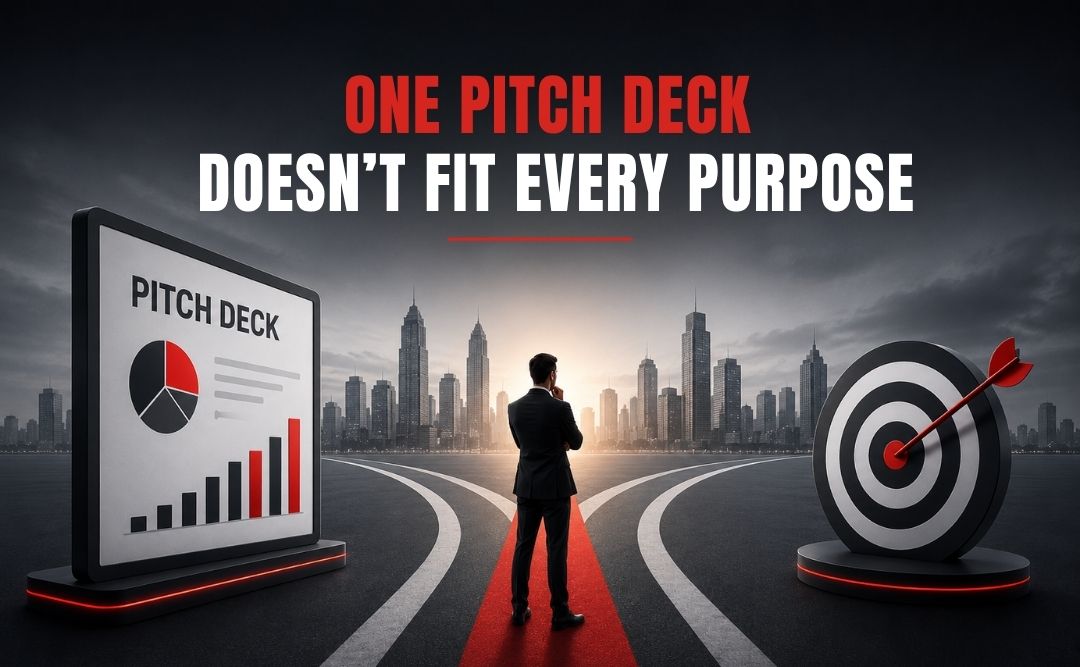
One Pitch Deck Doesn't Fit Every Purpose
Most businesses ask for a Pitch Deck before deciding what they want it to achieve.
The right presentation begins with the right purpose not the right slides.
One of the most common enquiries I receive begins with a simple sentence.
We need a Pitch Deck.
My response is rarely about slides, colours, animations or design.
Instead, I ask one simple question.
For a few seconds, the conversation usually becomes quiet.
Not because the business owner doesn’t understand their business.
But because very few organisations begin by defining the purpose of the presentation.
Most immediately begin discussing:
- How many slides should it have?
- How quickly can it be completed?
- What will it cost?
- Can it look premium?
- Can we make it more attractive?
These are important questions.
Just not the first ones.

The Real Problem Isn't the Presentation
Businesses often believe they need a better presentation.
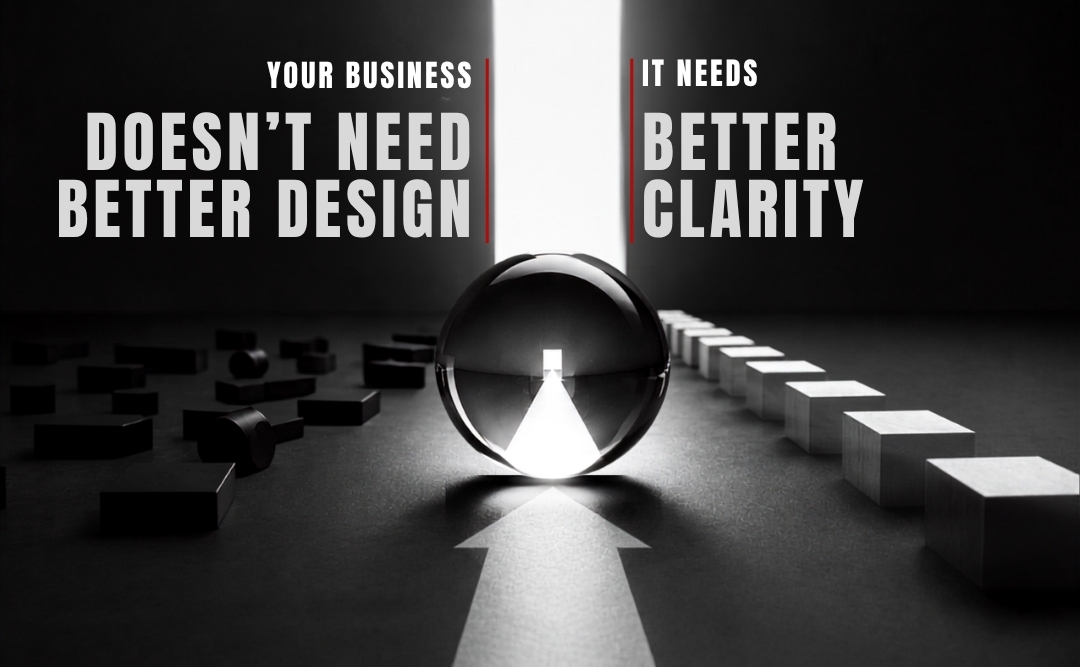
In reality, they often need greater clarity before creating one.
A presentation is not the objective.
It is only a communication tool.
Like every business tool, its effectiveness depends on whether it has been
chosen for the right purpose.
Creating the wrong Pitch Deck is similar to carrying the wrong document
into an important meeting.
The quality of the document may be excellent.
The relevance is not.
And relevance usually matters more than design.
Why Choosing the Wrong Pitch Deck Can Cost You Opportunities
Imagine introducing your company to an investor using a Sales Pitch Deck.
Or presenting an Investor Pitch Deck to a prospective customer.
Or taking an Internal Strategy Presentation into a partnership discussion.
Nothing may be technically wrong.
The design may be outstanding.
The content may be accurate.
Yet something feels disconnected.
The audience receives information.
But they don't receive the confidence they were looking for.
Because the presentation answers questions they never intended to ask.
One of the biggest communication mistakes businesses make is assuming that every presentation serves the same purpose.
It doesn't.
A well-designed Pitch Deck created for the wrong purpose is still the wrong Pitch Deck.

Not Every Pitch Deck Has the Same Purpose
Many business owners use the term Pitch Deck as though it describes a single document.
In reality, it represents an entire category of business presentations.
Each type is created for a different business conversation.
Choosing the right one is often more important than designing one.
| Pitch Deck Type | Primary Objective |
|---|---|
| Investor Pitch Deck | Build investor confidence and secure funding. |
| Corporate Pitch Deck | Introduce the organisation and establish credibility. |
| Sales Pitch Deck | Help prospects move towards a buying decision. |
| Product Pitch Deck | Explain one product or solution to a specific audience. |
| Partnership Pitch Deck | Explore collaboration opportunities. |
| Internal Pitch Deck | Support leadership discussions and business decisions. |
Although these presentations may look similar, they perform completely different jobs.
That is why one Pitch Deck cannot effectively serve every purpose.
Businesses Often Improve the Wrong Thing
Over the years, I have noticed a common pattern.Businesses spend weeks improving slides...
before spending an hour defining the objective.
They discuss layouts.
- Fonts.
- Colours.
- Icons.
- Animations.
- Transitions.
Yet the most important decision often remains unanswered.
What should this presentation help the audience decide?
When that answer is unclear, presentations gradually become collections of information instead of tools for business communication.
Additional slides are added.
- Company history.
- Infrastructure.
- Certificates.
- Awards.
- Clients.
- Manufacturing photographs.
- Everything seems important.
- Eventually the presentation becomes longer.
- Not clearer.
Every Presentation Should Influence One Decision
Most people believe presentations exist to share information.
Information is only one part of their job.
Every business presentation exists to influence a decision.
An investor decides whether to continue discussions.
A customer decides whether to request a quotation.
A distributor decides whether to explore a partnership.
A management team decides whether to approve a proposal.
A strategic partner decides whether further conversations are worthwhile.
Every Pitch Deck is quietly asking the audience to make one business decision.
When that decision is unclear, the presentation loses its direction before
the first slide is even designed.

Before Creating Slides, Define Three Things
Before opening PowerPoint, answer three simple questions.
Every audience evaluates your business differently.
What business question are they trying to answer?
Once these three answers become clear…
The presentation almost begins writing itself.
Most Corporate Pitch Decks Begin at the Wrong Place
During consulting discussions, I often review existing Corporate Pitch Decks.
Most follow a familiar structure.
- About Us
- Company History
- Vision & Mission
- Manufacturing Facilities
- Infrastructure
- Certifications
- Awards
- Clients
- Contact Information
There is nothing technically wrong with this sequence.
The question is…
Most customers are not trying to learn your company history.
They are trying to answer one simple question.
That question should shape the presentation.
- Not the number of years you've been in business.
- Not the size of your factory.
- Not the number of certificates on the wall.
Those details matter, but only after the audience believes you understand
their situation.
A good Corporate Pitch Deck introduces the company.
A great Corporate Pitch Deck first demonstrates that it understands the
customer.
Products Explain. Outcomes Persuade.
Consider these two statements.
We manufacture Stretch Film.
Technically correct.
We help manufacturers improve load stability, reduce packaging waste
and minimise transportation damage.
Both statements describe the same product, but they create two completely
different conversations.
The first explains what the company makes. The second explains why the
customer should care.
Customers rarely remember product specifications. They remember business
outcomes.
That is why the most effective Pitch Decks explain business value before
product features.
They buy better outcomes.

One Presentation.
One Purpose.
One principle I often discuss during communication consulting is remarkably simple.
One Page. One Purpose.
One Pitch Deck. One Purpose.
The same thinking applies to presentations.
Trying to create one presentation that satisfies investors, customers,
distributors, partners and internal leadership usually creates a
presentation that satisfies nobody.
Every unnecessary slide weakens the central message.
Every unrelated topic creates another distraction.
Every additional objective reduces clarity.
A focused presentation almost always communicates more effectively than a
comprehensive one.
Confidence influences decisions.
Before You Create Your Next Pitch Deck
Before discussing design, ask these questions.
Why are we creating this presentation?
Who is the audience?
What problem are they trying to solve?
What should they understand about our business?
What decision should they make after the presentation?
Which type of Pitch Deck best supports that conversation?
If these answers are unclear…
Design should wait.
Questions Worth Discussing
Before approving your next Pitch Deck, discuss these questions with your leadership team.
01
Are we trying to inform, persuade or secure a decision?
02
Does every slide support one clear objective?
03
Have we designed this presentation for the audience—or for ourselves?
04
Are we explaining products or communicating business value?
05
Would removing ten slides actually make the presentation stronger?
Sometimes…
The most valuable slide is the one you decide not to include.

Leadership Checklist
Before considering your Pitch Deck complete, ensure that you can confidently answer Yes to each of these questions.
✓ We know exactly who this presentation is for.
✓ We know what decision we want the audience to make.
✓ Every slide supports that objective.
✓ The presentation begins with the audience's business situation.
✓ Products are presented as solutions, not simply as features.
✓ Information has been prioritised rather than accumulated.
✓ The presentation creates clarity instead of adding complexity.
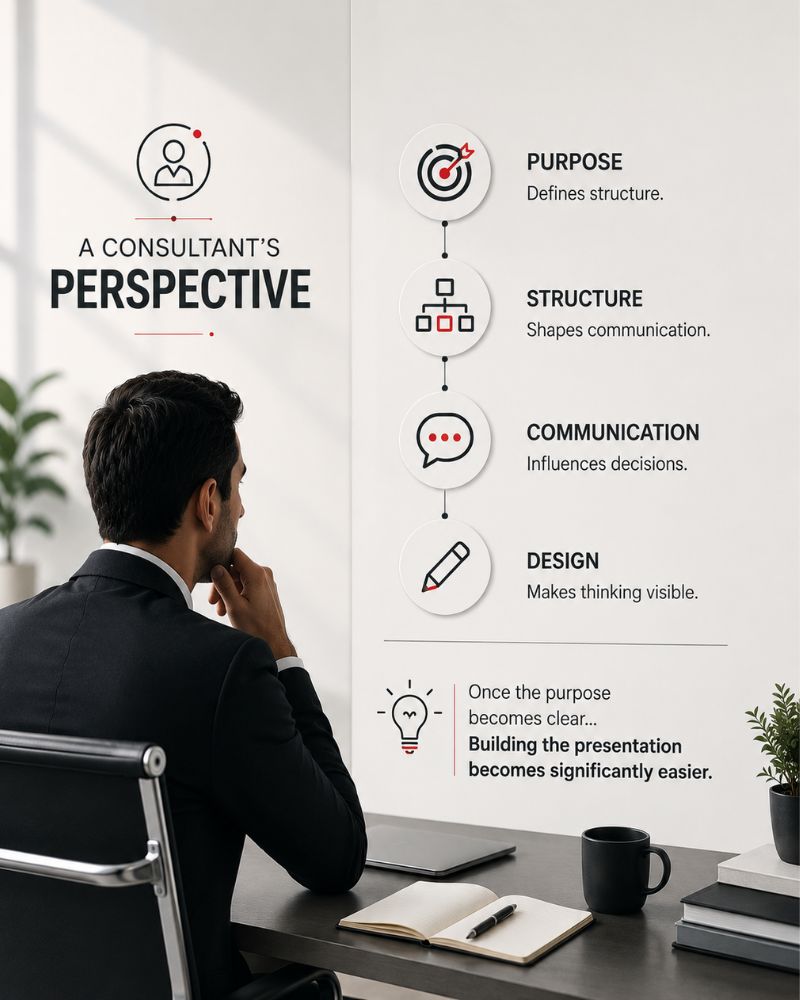
A Consultant's Perspective
One of the most common mistakes I see is not poor presentation design.
It is choosing the wrong presentation for the right business opportunity.
Businesses often invest significant time improving layouts while spending very little time defining purpose.
Yet purpose determines structure.
Structure determines communication.
Communication influences decisions.
Design simply makes that thinking visible.
Once the purpose becomes clear...
Building the presentation becomes significantly easier.
One Final Thought
The best Pitch Deck is rarely the one with the most impressive design.
It is the one created for the right audience…
to support the right business conversation…
and influence the right business decision.
A Pitch Deck should never be measured by the number of slides it contains.
It should be measured by the business decision it helps create.
Choose the right purpose first.
The right presentation will usually follow.
Because good presentations don't begin with PowerPoint.
They begin with better business thinking.
When the purpose, audience or required presentation format is still unclear, a focused discussion can help define the right starting point before execution begins.
Our Recent Blogs :