
Independent Communication Consultation for Clearer Business Communication
A business can have the right information and still communicate it poorly.
The problem may not be the facts. It may be who is receiving them, what matters to that audience, how much they need to know, when they need to know it and how the message is presented.
My Communication Consultation examines those decisions before important business communication is written, designed, presented or sent.
Communication Begins Before the Wording
When a business asks, “What should we write?”, I prefer to begin one step earlier.
Why are we communicating?
Who needs to receive the message?
What do they already know?
What matters to them?
What should they understand after receiving it?
What should they believe, decide or do next?
Only then does wording become the main question.
Because a well-written message can still be the wrong communication if it is created for the wrong audience, purpose or context.
The Same Message Does Not Carry the Same Value for Every Audience
Effective communication depends on more than the product or service being offered.
Customer segment, purchasing priorities, geography, language, culture, lifestyle and context can all change what deserves emphasis.
Consider the same broad product category.
A buyer evaluating a value-oriented car may give greater importance to mileage, maintenance cost and everyday practicality.
A buyer considering a premium car may place greater importance on safety, comfort, technology, ownership experience or status.
The product category may be the same.
What matters most to the customer may be very different.The same principle applies to a restaurant.
One audience may respond strongly to lighter preparation, ingredients, nutrition or portion control. Another may care more about taste, richness, quantity, familiarity and value.
Neither communication is automatically better.
It becomes appropriate according to the audience it is meant for.
Geography can change the communication further. Language, local habits, cultural references, purchasing behaviour and expectations may differ significantly from one market to another.
That is why communication cannot begin only with:
“What do we want to say?”
It must also ask:
“Who are we speaking to, and what matters to them?”
Purpose Changes Communication Too
The same organisation may need to communicate with a customer, investor, distributor, strategic partner, employee or authority.
They are all looking at the same business.
But they are not asking the same questions.
An investor presentation should not automatically be the same presentation used to approach a customer.
A distributor may need different information from a strategic partner.
A complaint to an authority requires different structure, evidence and tone from a sales proposal.
A first WhatsApp response to an enquiry should not read like a company profile.
The audience may change. The purpose may change. The communication should change with them.
This is why one piece of communication cannot automatically serve every business situation.
What Do I Examine in a Communication Decision?
the business objective behind the communication
what deserves emphasis and what is secondary
whether facts, claims or evidence are sufficient for the situation
the intended audience and relevant customer segment
what should be included, reduced, postponed or left out
whether visuals and words support the same message
geography, language, culture and market context where relevant
the appropriate tone and level of detail
whether the communication is aligned with the brand
what the audience already knows and what it needs to know
message hierarchy and sequence
what response, understanding or decision is expected from the audience
the primary message that should remain after the communication
the medium: website, email, WhatsApp, presentation, proposal, brochure or another format
existing material that can be used better instead of recreated
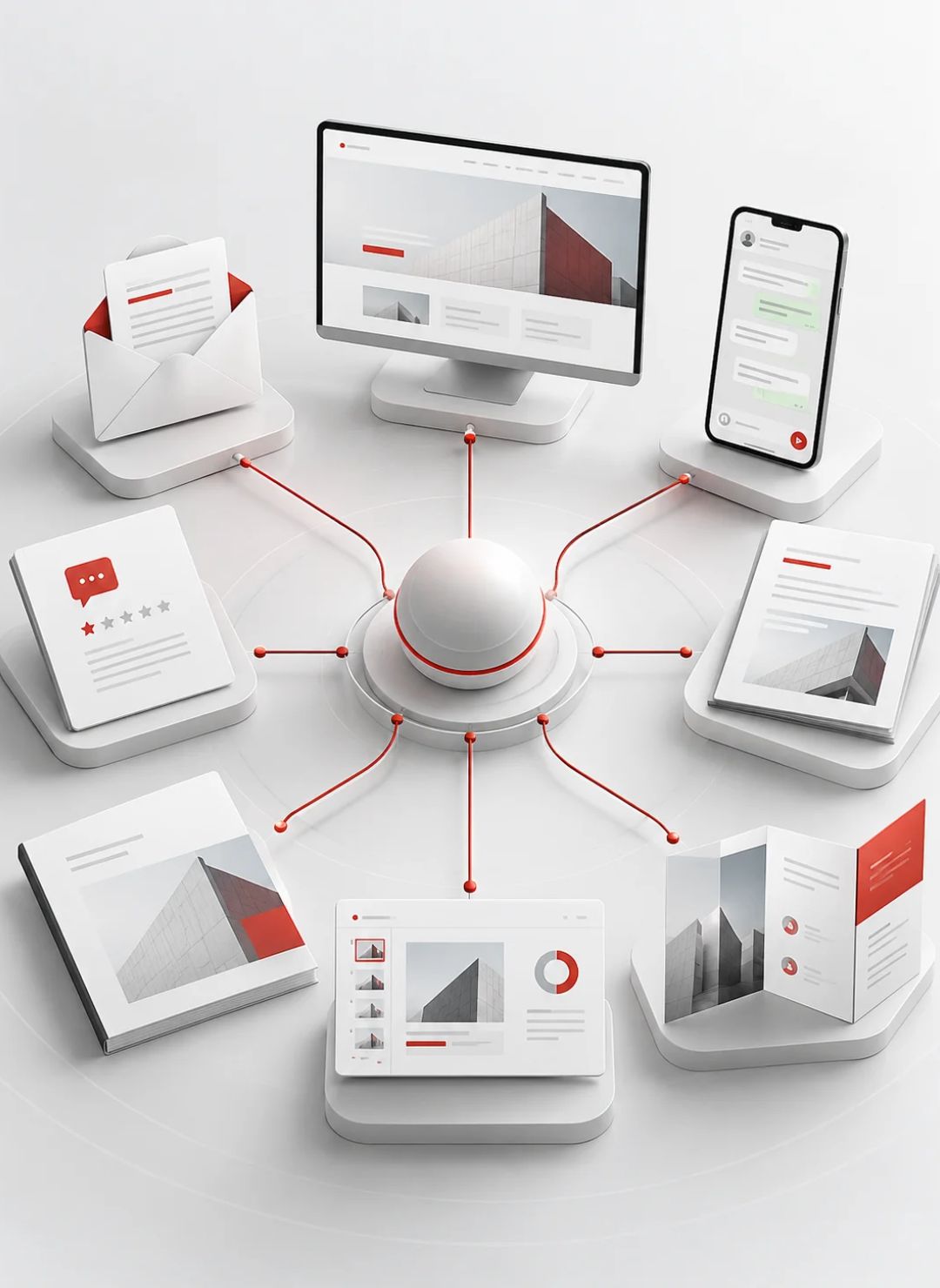
The Medium Also Changes the Message
The right communication is not only about content.
A WhatsApp message, formal email, pitch deck, complaint, proposal, website page and corporate profile serve different situations.
The audience may be the same, but the medium changes how much information is appropriate, how quickly the point should become clear, what evidence is necessary and what tone feels natural.
A short enquiry may need a short, precise response.
A serious escalation may require chronology, references, supporting facts and a clearly stated request.
A proposal may need to establish relevance and value before presenting scope and commercial terms.
A presentation needs to decide what the audience should understand from each stage of the conversation, rather than simply placing all available company information into slides.
Correct Information Can Still Be the Wrong Communication
The information may be correct, but:
the important point may be buried,
too much may be said too early,
technical language may be used for a non-technical audience,
the tone may be too casual or unnecessarily formal,
the communication may answer questions the audience is not asking,
or the audience may have to work too hard to understand what the business actually means.
This is an important distinction.
Accuracy is essential. Relevance makes accuracy useful.A practical example is a pitch deck.
Company history, infrastructure, certifications and capabilities may all be accurate information. But an investor, customer, distributor and strategic partner do not necessarily need the same information in the same order.
The communication has to serve the conversation for which it is being created.
More Information Does Not Always Create More Clarity
Businesses naturally know far more about themselves than their audience does.
That can create an understandable temptation to explain everything.
But communication is not improved merely by adding more information.
The audience needs enough information to understand what matters to its decision.
Too little can create doubt.
Too much can hide the point.
Good communication does some of that work before the message reaches them.
What to Say Is Only One Part of the Decision
What should not be said yet.
What deserves emphasis.
What needs evidence.
What can be simplified.
What requires explanation.
What tone fits the relationship and situation.

When Is Communication Consultation Worth Considering?
Communication Consultation may be useful when an important message is being prepared but the direction is not yet clear; when different stakeholders want different information included; when customers repeatedly misunderstand the offer; when technical information has to reach a non-technical audience; when an important proposal, presentation, profile or website is being planned; when communication has become too long or complicated; or when the business wants an independent perspective before committing resources to writing, design or production.
It can also be useful when the existing communication is technically correct but does not appear to be creating the understanding the business intended.
Sometimes it needs a different emphasis, a different sequence, a different tone or less information.
What Should Be Clearer After Communication Consultation?
That clarity gives subsequent writing, design, presentation or other execution a stronger foundation.
It also reduces the risk of producing polished communication that is professionally executed but strategically misplaced.
